

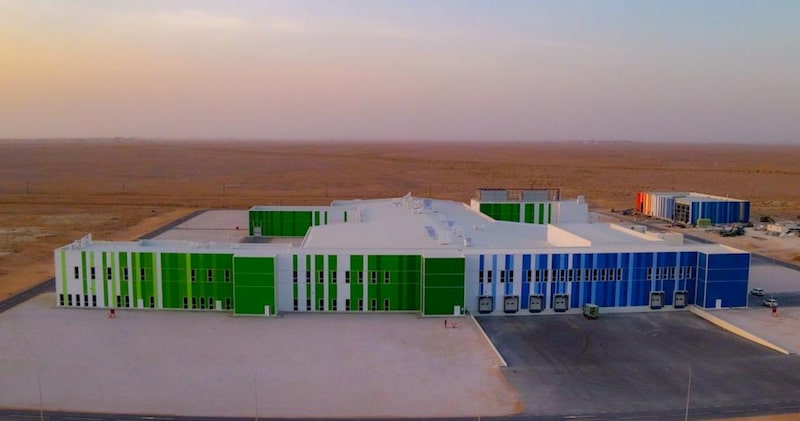

JBS, one of the world’s largest food companies, has just announced another investment to increase its presence in the Middle East and serve countries in North Africa and Southeast Asia: the creation of a new multi-protein platform in Oman, focused on the production of beef, poultry, and lamb. The company invested $150 million to acquire an 80% stake in a newly created food holding company, in partnership with Oman Food Capital (OFC).
The investments will be directed mainly towards the completion of the integrated poultry plant in A’Namaa, in a geographically strategic region: 380 kilometers from Muscat, the country’s capital, and less than 300 kilometers from Dubai, in the United Arab Emirates. Another part of the investment will go to Al Bashayer’s beef and lamb processing unit in Thumrait, southern Oman. The initiative expands JBS’s operations with a diversified platform in a region marked by strong demand for halal food and growing protein consumption.
With these investments, the operation is expected to reach a capacity of more than 300,000 tons per year – an average of about 1,000 cattle, 5,000 sheep, and 600,000 poultry per day. Production is expected to begin within six months for beef and sheep, and within 12 months for poultry.
The project is expected to create more than 3,000 direct jobs over the next five years in Oman across the entire production chain, contributing significantly to local economic development, workforce training, and growth in the country’s agri-food sector.
“The Middle East is a priority growth market for JBS, and this expansion reflects our long-term commitment to the country and the MENA region in general,” says Gilberto Tomazoni, Global CEO of JBS.
Arriving in Oman is part of a broader strategy: to grow in the global halal market, which has around 2 billion consumers worldwide. Previously, JBS opened a factory in Jeddah, Saudi Arabia, to position the country as a center for the production and export of halal foods and to serve the region known as MENA (which includes the Middle East and North Africa), as well as Southeast Asia.
In January, it announced investments to double chicken production at the Jeddah plant. The 41,000-square-meter plant is expected to end 2026 with a production of 30,000 tons – part of an $85 million capital investment in Saudi Arabia. The company also operates Seara factories in Dammam, also in Saudi Arabia, and in Ras Al Khaimah, in the United Arab Emirates.
“The investments support growth in the Middle East and North Africa, in other countries on the continent, and in Asia, while reinforcing our commitment to sustainable food security around the world,” says João Campos, president of Seara.
JBS’s growth strategy in the region involves getting closer to local consumers. Seara is among the top three frozen chicken brands in Saudi Arabia and has a 93% recognition rate in the frozen food category in countries in the region.
To this end, it has invested in marketing initiatives such as sponsoring the Arabic version of the musical reality show The Voice. The most recent initiative is a brand repositioning, which includes a new visual identity and the launch of an advertising campaign featuring local TV stars, with the slogan “Seara – either you love it, or you’ve never tried it.”
Monique Oliveira, Seara’s marketing director for MENA, says the repositioning seeks to raise brand awareness in an increasingly sophisticated market. “The concept allows us to connect genuinely with the lifestyle of local consumers, transforming each meal into an unforgettable taste experience.”
