


Bogotá — The makeup of congresses, assemblies or parliaments in Latin America are governed by law, with those who occupy their seats elected, mainly, by popular vote. But the budget for each legislature also plays an important role in determining how they operate.
We present the budgets allocated to the legislative branch in Latin America’s main economies, taking into account not only the salary of the legislators, but also the operating costs that each body requires, including the payroll for advisors and other officials.
The high operating costs of the legislatures in some Latin American countries mean that a debate is ongoing on how necessary it is to have a large number of lawmakers, and which is why some countries, such as Colombia, have proposed amendments to the constitution to reduce the number of seats, or even make congress unicameral; however, such proposals have not had political support.
The value of each budget is given in U.S. dollars and was calculated using exchange rates on February 9, 2022.
Argentina
Argentina’s Congress bicameral. The Senate is composed of 72 members who are elected for six years, although it is renewed by one-third every two years. The Chamber of Deputies has 257 members who are directly elected for a four-year term, with half of the members renewed every two years.
According to Argentina’s 2021 budget, funds for the legislative branch totaled 40.27 billion pesos ($380.3 million), allocating 32.85 billion pesos ($310.2 million) for legislative activities and dividing the remainder into the payments of goods and services.
The 2021 budget in Argentina will also be applied again in 2022 after the government failed to obtain a majority of votes to approve the budget in Congress.
Brazil
Brazil’s legislative branch is divided into the Senate and the Chamber of Deputies. The Senate is composed of 81 members appointed for eight years, and in which two-thirds are renewed every four years. The Chamber of Deputies is composed of 513 members elected for a four-year term.
A review published by the Convergencia Brasil portal, run by a group of business leaders and executives working for equality in the country, states that Congress has operating expenses of 10.8 billion reais per year ($2 billion), taking into account salaries, housing allowances, advisors, vehicles, cell phones, among other things, calculations based on a survey by the United Nations with the Inter-Parliamentary Union.
Read More: Bolsonaro Says It’s Possible Public Servants Won’t Get Raises
Chile
The National Congress of Chile is bicameral. The Senate is composed of 50 members elected by popular vote and appointed for a period of eight years, with half of its members renewed every four years. Meanwhile, the Chamber of Deputies comprises 155 members appointed for four years.
For 2021, Chile’s Congress had a budget allocation of 130.59 Chilean pesos ($150.52 million), its highest ever.
Colombia
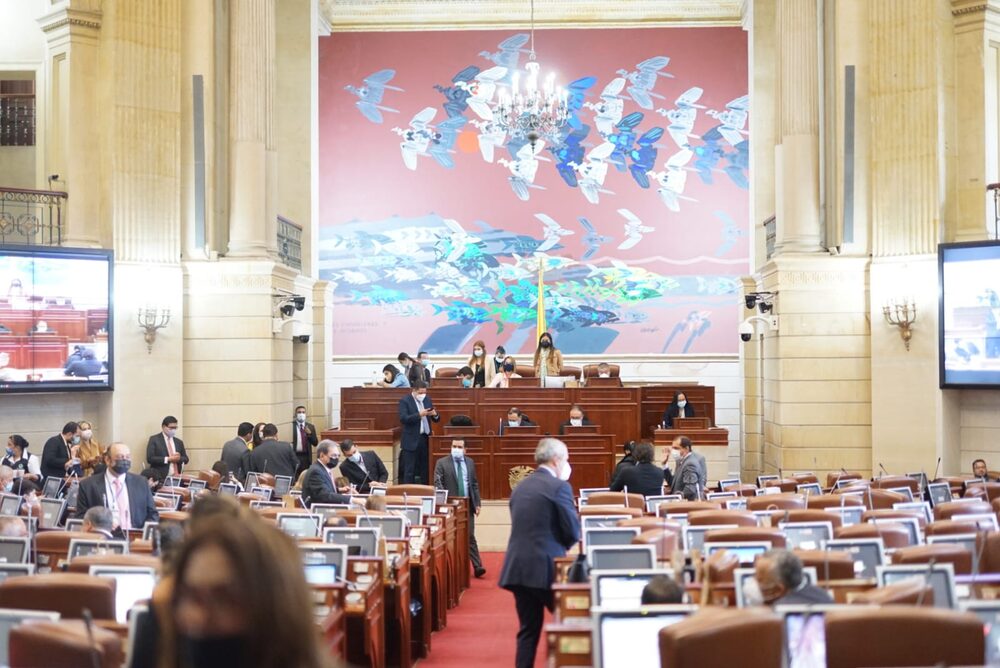
Colombia’s Congress has a total of 280 members. In the Senate, 108 senators are elected for a four-year term, while 178 congress members are elected to the Chamber of Representatives for the same length term.
The 2022 budget for the operation of Colombia’s Congress is 662.61 billion pesos ($168.12 million).
Mexico
Mexico’s Congress is bicameral and is composed of 500 Deputies and 128 Senators. In the Chamber of Deputies, 300 are elected by the principle of relative majority and 200 by proportional representation. In the Senate, 64 senators are elected by relative majority, 32 by proportional representation and 32 by first minority.
The country’s 32 local state congresses have an independent budget allocation, and in 2021 the budget for the 32 legislatures was 18.56 billion pesos ($907.03 million).
However, there are disparate figures from one state to another, according to the country’s competition watchdog, which says that “two states similar in population and per capita income may have congresses with different costs. While the budget of the Sonora Congress is 765 million pesos ($37.38 million), the Tamaulipas Congress has a budget of 194 million pesos ($9.47 million)”, according to a report on the 2021 legislature.
Peru
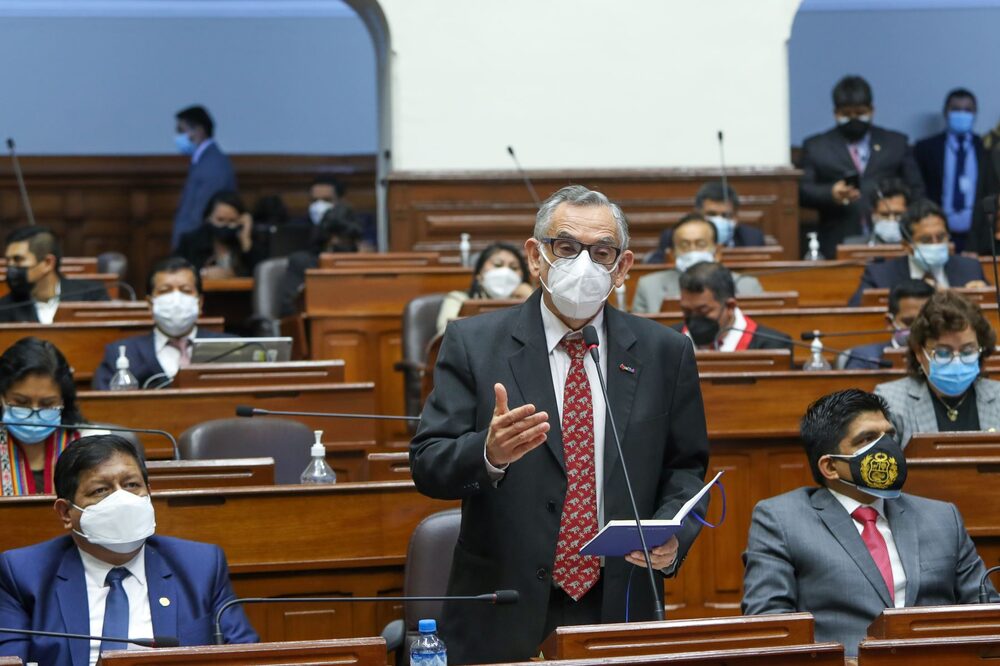
Peru’s Congress is composed of 130 representatives and just one chamber. The lawmakers represent 27 jurisdictions and remain in their posts for five years.
The budget for Congress for 2021 was 614,548,926 soles ($160.7 million), and was reduced for this year to 584,861,389 soles ($152.7 million).
Read More: ‘We Need to End the Dictatorship’: An Interview with Venezuela’s Juan Guaidó
Venezuela
The Venezuelan National Assembly is composed of 277 deputies as of 2021. Under previous laws, it was composed of a total of 167 deputies in a single chamber.
According to the Assembly’s website, the budget for the 2022 financial year is 53,232,347 bolivars ($11.85 million), “destined to cover operating expenses for the elaboration of laws, regulations and national and international agreements”.
Also Read:
