

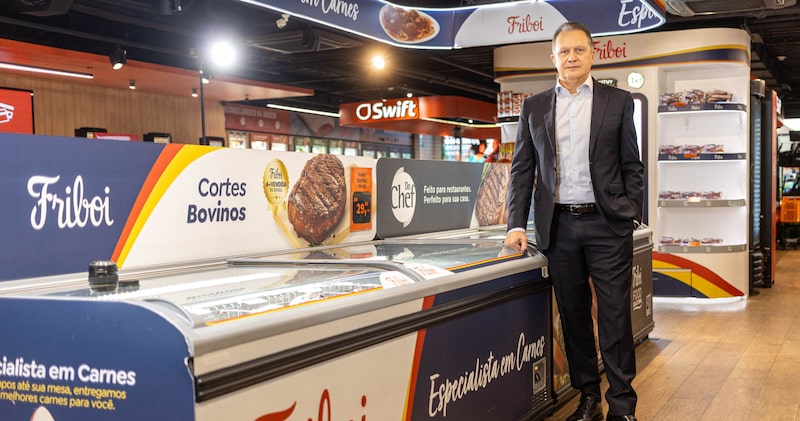

As the purchasing decision gains increasing importance within stores, JBS has been deepening its relationship with retailers to help supermarket operators transform traditional categories into growth engines. The strategy involves structured programs for execution, training and innovation that aim to improve the consumer journey at the point of sale while simultaneously increasing profitability and operational efficiency for retailers.
More than just supplying products, JBS plays a direct role in developing categories within stores, combining assortment management, operational standardization, section layout, and ongoing team training to make the shopping experience more efficient, organized, and relevant for the consumer.
One of the key examples is “Friboi+”, a program created in 2001 to professionalize supermarket butcher shops. Now present in thousands of retail locations across the country, the model combines standardized cuts, occasion-based communication, butcher shop ambiance, and technical training for staff.
In 2025, supermarkets that took part in the program reported a 63% increase in sales across the categories covered compared to the previous year, according to Nielsen data. In medium-sized stores, growth was 15%, while small stores saw their sales triple.
According to the company, the program helped transform the meat counter from an operational area into a platform for customer experience and differentiation within stores.
“Today, the competition isn’t just on the shelves. Consumers are looking for trust, convenience and a better in-store experience. That’s what we’re working on with our customers,” says JBS Global CEO Gilberto Tomazoni.
Strengthening categories with higher added value is also part of the company’s strategy. In the case of Friboi, the expansion of “Friboi+” helped boost premium lines and reinforce attributes related to quality, service and trust. Recently, the brand began using the character Valdir, a master butcher created to symbolize expertise and closeness to the consumer.
This approach extends to other JBS brands. At Seara, the company has been expanding initiatives aimed at professionalizing categories related to convenience and prepared foods, segments that have gained ground amid growing consumer demand for practicality in daily life.
One of the main projects is “Seara Reserva Pork Butcher Program”, which a focus on the pork category and is already available in hundreds of stores across the country. Based on training, execution, and operational standardization, the program has become the main driver of growth in the category and currently accounts for more than half of Seara’s pork revenue in the Brazilian market.
Another initiative is “Rotisserie Seara”, created to support retailers in handling ready-to-eat products, such as rotisserie chicken and pork tenderloin. The goal is to help retailers add value within the store while serving consumers who seek more convenient meals without compromising on quality.
The company also invests in training its point-of-sale teams. The “Empório de Frios” program, for example, trains staff in cutting, slicing, storing, and organizing products, aiming to raise service standards, improve product display, and make the shopping experience smoother for consumers.
In addition to operational execution, product innovation has played a significant role in the company’s retail strategy.
One example is Seara’s new premium pack of chilled chicken, developed using modified atmosphere technology, which preserves freshness and improves product presentation on the shelves. According to the company, the solution reduces handling within stores, improves operational efficiency, and enhances the consumer’s perception of quality.
Seara has also been expanding its lines focused on convenience and nutrition, with an emphasis on quick-prep products and foods with higher protein content, in line with recent changes in consumer habits.
In JBS’s view, growth in the food retail sector increasingly depends on the ability to transform categories into more efficient, organized and consumer-oriented experiences.
“When execution improves, the entire chain benefits. Retailers increase profitability, consumers make better purchases, and the industry strengthens its brands. It is this alignment that sustains long-term growth,” says Tomazoni.
