

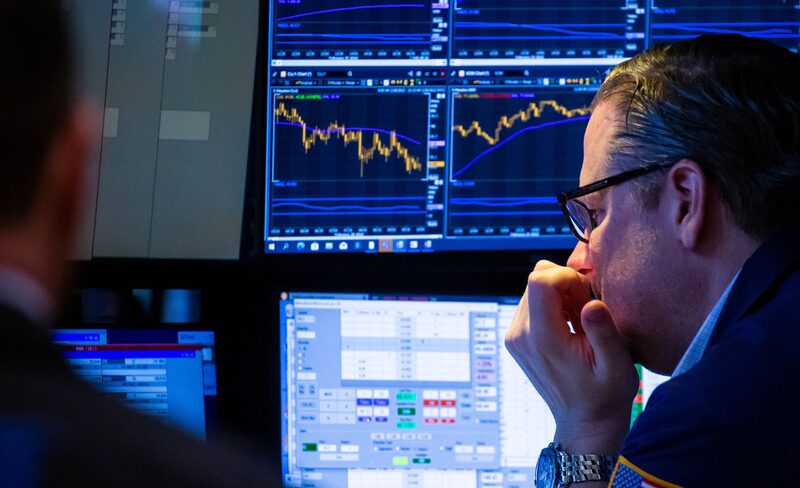
A roundup of Monday’s stock market results from across the region
📉 A Bad Day:
The negative performance of US markets weighed on the behavior of the main Latin American markets on Monday, with all markets closing with losses.
The fall in the price of the main commodities also affected the region’s stock markets. Brazil’s Ibovespa (IBOV) saw the region’s sharpest fall during the day.
Vale (VALE3) and Petrobras (PETR4) shares were among those posting the sharpest losses and dragging down the São Paulo Stock Exchange’s main index.
Mexico’s stock market continued the trend and the S&P BMV/IPC (MEXBOL) fell almost 0.5% on the day. The materials, finance and industrial sectors dragged down the market’s performance.
🗽 On Wall Street:
US contracts fluctuated Monday after technology shares led a Wall Street slide, including a plunge in Twitter shares as Elon Musk walked away from his deal to buy the firm.
The dollar’s biggest jump in a month toward levels last seen at the height of the market panic over Covid underlined the caution in global markets. The eurozone’s common currency is closing in on parity with the greenback due to the intensifying gas crisis and acute recession fears in the region.
Treasuries rallied on Monday, extending this year’s volatility in the bond market and taking the US 10-year yield below 3%.
Commodities including oil are under pressure, while Bitcoin dropped back toward the $20,000 level.
The S&P 500 dropped 1.15%, the Dow Jones Industrial slipped 0.52% and the Nasdaq Composite (CCMPDL) slid 2.26%.
Much is riding on company profit filings and the US inflation data. A brief equity rebound from this year’s selloff is already fizzling ahead of the reports. Risk appetite may struggle to digest evidence of earnings challenges alongside stubborn price pressures that point to sustained monetary tightening.
“Anecdotal evidence so far has indicated that there will be a slowdown in earnings that we’ll probably see translate into weakening guidance,” Tracie McMillion, head of global asset allocation strategy at Wells Fargo Investment Institute, said on Bloomberg Television. “We do see the need for analyst expectations to come down.”
In China, investors are concerned more Covid lockdowns may lie ahead as Beijing continues with a strategy of mass testing and mobility curbs. A government push for stimulus to shore up growth is starting to have an impact: credit jumped last month to the highest on record for June.
Meanwhile, the latest Fed commentary highlighted both the central bank’s hawkishness and the risks that come with aggressive interest-rate hikes.
Fed Bank of Atlanta President Raphael Bostic said the US economy can cope with higher interest rates and repeated his support for another jumbo move this month. Fed Bank of Kansas City President Esther George, who dissented last month against the central bank’s 75 basis-point rate increase, cautioned that rushing to tighten policy could backfire.
🔑 The Day’s Key Events:
Oil prices halted the rally with which they closed last week after the outlook for crude demand was hit by another surge in Covid-19 cases in China.
Cases in Shanghai recorded 69 new infections on Sunday, the most since late May, adding further pressure to the strict Zero Covid policy in the largest oil importer.
On the supply side, the US Department of Energy awarded nearly 39 million barrels of crude from the Strategic Petroleum Reserve to 14 companies, Bloomberg reported.
President Joe Biden announced in March that he would use the country’s reserves to try to reduce international prices and impact domestic gasoline prices.
The US government is already beginning to see some signs of relief after the cost of gasoline fell for 27 consecutive days, according to Bloomberg, easing one of the main pressures on inflation and one of the Biden administration’s concerns ahead of the November elections.
🍝 For the Dinner Table Debate:
The most experienced entrepreneurs are acting as angel investors in the region and are beginning to share their money and knowledge with the new generations in Latin America.
In this context, venture capital fund Bridge emerged, launched by founders of Bitso, Ben & Frank, Zubale, Yalo, Fitpass and Cultura Colectiva, among others.
“It all stems from the idea of entrepreneurs supporting other entrepreneurs. A couple of years ago, each of the partners of Bridge LatAm was making angel investments on their own and we got together to make them together,” Patricio Aznar, managing partner of the fund, said in an interview with Bloomberg Línea.

Aznar says the fund launched in 2020 with a small amount, and which they invested in 11 early-stage startups. And today they have a second fund of $15 million to invest.
But they are not the only ones. Ricardo Weder, CEO of Jüsto, is another entrepreneur who has become a regular angel investor. The founder told Bloomberg Línea that he has already invested in more than 40 startups.
In Argentina, entrepreneur Pierpaolo Barbieri, CEO of unicorn Ualá, is another angel investor who decided to form an equity fund he called 17Sigma. The $30 million fund targets companies in the region focused on digitization.
-- Carlos Rodríguez Salcedo, a content producer for Bloomberg Línea, and Sunil Jagtiani of Bloomberg News, contributed to this report
