

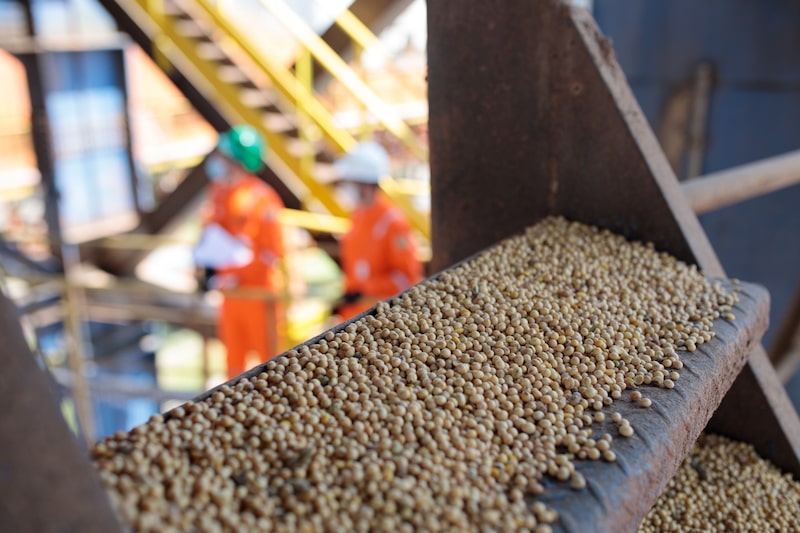
Bloomberg — Some Chinese soybean processors are walking away from contracts to buy shipments from Brazil because a sudden jump in export prices from the Asian country’s biggest supplier has made crushing unprofitable.
About 10 cargoes from the South American nation have been canceled since last week in a move known as a washout, according to people familiar with the matter. In a washout, no physical delivery is performed on a contract with the agreement of both buyer and seller.
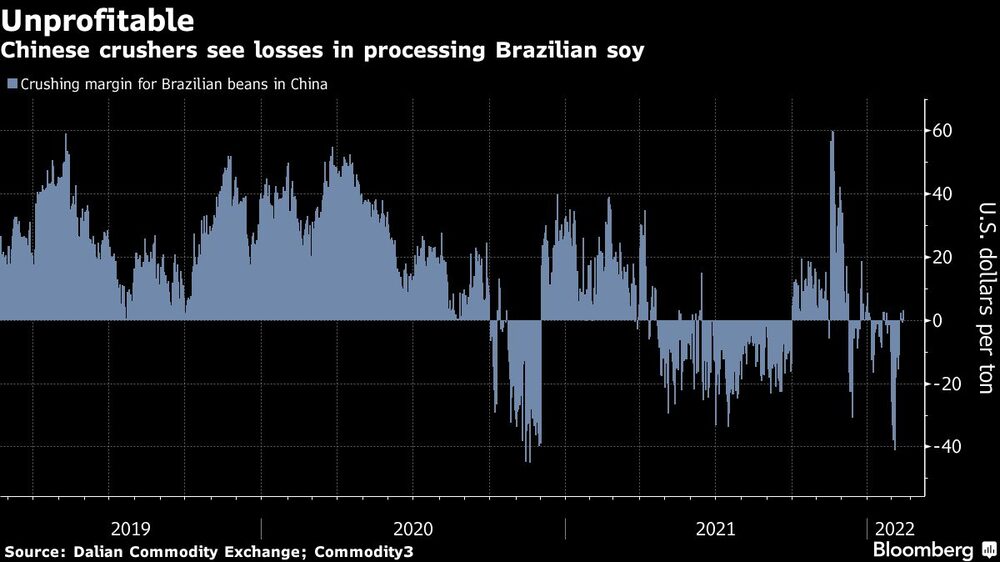
The move comes after Chinese soybean crushing margins turned negative and export premiums spiked in Brazil because of a drought that slashed the harvest in the world’s biggest grower, said the people, who asked not to be identified as the information is private.
Prospects for Brazil’s crop have deteriorated after weeks of dry weather, with analysts repeatedly cutting estimates for a harvest that was initially expected to be a record. Importers have been turning to American soybeans, with the pace of U.S. exports rising at a time of year when Brazilian cargoes normally dominate. Benchmark Chicago futures have risen to near an eight-month high.
Chinese processors are running losses of about $20 a ton on imported soybeans at the moment, said the people. Buyers are likely to put purchasing plans on hold for all overseas supplies, they added.
China, the world’s biggest importer of soybeans, is especially vulnerable to inflationary pressures stemming from the blistering rally in oilseed prices. The country has the largest pork industry on the planet and depends heavily on foreign supplies of soybeans for its processing industry, which produces meal for hog feed and cooking oil.
“Margins are bad, hog prices are awful and people don’t want to long a bunch of meal,” said Darin Friedrichs, co-founder and market research director of Sitonia Consulting, a China-based agricultural information service provider.
Live hog prices have roughly halved in the past year, prompting Beijing to plan pork purchases to bolster state reserves.
