

A roundup of Tuesday’s stock market results from across the region
🗽 On Wall Street:
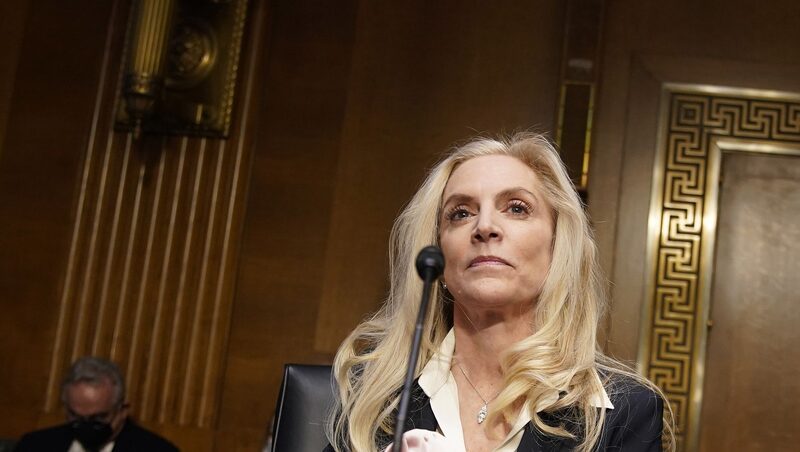
The Federal Reserve continues to signal that it will adopt a much more aggressive monetary stance and this time it was board member Lael Brainard who dropped the hint.
She called the task of easing inflationary pressures “crucial” and said the central bank will raise interest rates steadily, while beginning balance sheet reduction as soon as next month.
“Given that the recovery has been considerably stronger and faster than in the previous cycle, I expect the balance sheet to shrink considerably faster than in the previous recovery,” she said in prepared remarks for a speech before the Minneapolis Fed.
The S&P 500 fell 1.26%, while the Nasdaq Composite (CCMPDL) lost 2.26%, and the Dow Jones Industrials dropped 0.80%.
The market also remains wary of the war in Ukraine after it again, which has again raised the tone of the United States and its allies, which are threatening to impose further sanctions against Russia. A new round of sanctions would include a ban on all new investments in Russia and further measures against financial institutions and state-owned companies.
🔑 The Day’s Key Events:
Oil prices fell amid a volatile session, following the announcement that new sanctions will be announced by the United States and its allies in G7 on Wednesday.
Although the market mood benefited from the news, the strength of the U.S. dollar impacted the final settlement of the day, with a stronger dollar making commodities priced in the currency less attractive.
Despite this, Craig Erlam, senior market analyst at Oanda, said: “The threat of European sanctions on Russian oil remains an upside risk to crude oil prices”, although “short-term strong opposition from certain member states” must be taken into account.
Prices remain above $100 after the Russian invasion of Ukraine in February had pushed them to highs not seen for 14 years.
🥇 The Leader:
Colombia’s COLCAP index rebounded after being one of the indices that fell the most in Latin America in Monday’s session, and closed Tuesday with a rise of 0.96%.
The main index of the local stock exchange benefited from the performance of the shares of Ecopetrol (ECOPETL) and Canacol Energy, which were boosted by the increase in the prices of raw materials in the first hours of trading.
Despite the good performance, the market is attentive to the March inflation data to be released on Tuesday night, which would indicate that the cost of living continues to rise.
The inflation forecast for the third month of the year by Bancolombia’s research team is 0.82%, which would bring the increase in consumer prices to 8.34% in its annual measurement.
The second best performing stock market was Peru’s, which managed to detach itself from the ongoing political crisis, after President Pedro Castillo announced a curfew for the capital, Lima, and the constitutional province of Callao.
The state of emergency imposed by the government left the streets of the metropolitan area semi-empty and few activities can be carried out.
📉 A Bad Day:
Brazil’s Ibovespa (IBOV) had the worst performance in the region and closed with losses, in line with the U.S. stock markets.
Brazil’s stock market deepened its declines following the statements by Brainard, which hinted at a more aggressive stance by the U.S. central bank.
Consumer discretionary, financials and materials sectors were the worst performers on the day.
Argentina’s Merval (MERVAL) broke a streak of four consecutive sessions of gains, while Mexico’s S&P BMV/IPC (MEXBOL) also closed with losses, dragged down by the international mood.
🍝 For the Dinner Table Debate:
The latest stock market move by Elon Musk, the world’s richest entrepreneur, continues to attract attention. After he announced the purchase of a 9.2% stake in Twitter (TWTR) on Monday, his fortune has continued to grow thanks to the boost he gave to the social network’s stock and that of his company Tesla (TSLA), his main source of wealth.
With Monday’s market close and Twitter’s gains, the billionaire’s fortune advanced $15.3 billion to $288 billion, according to the Bloomberg Billionaires Index. Shares of Tesla, of which he owns 17%, also advanced.
Musk’s purchase also had an impact on the wealth of Jack Dorsey, co-founder and former CEO of Twitter, who ranks 248th among the world’s richest persons, with a net worth of $9.04 billion.
Following the results of Twitter’s stock trading on Monday, Dorsey added between $759 million to his fortune between April 3 and 4.
